Injuries:
Contained below is a sampling of injuries and conditions diagnosed and treated by Dr. Abraham on a regular basis.
Despite the common name “Sports Hernia” this condition is not actually a hernia.
It is a tendon strain of one or more of the abductor muscles that attach at the pubic bone. It is fairly common with rugby and soccer players
Symptoms
- Pain at the groin.
- Weakness of the leg.
- Decreased mobility.
Treatments
- Dextrose prolotherapy can relieve the pain by resolving the tendon strain.
A combination of carpal tunnel syndrome and an irritation of the nerve roots in the neck. The pinching of the nerve roots in the neck cause pain in both the neck and the wrist.
Symptoms
- Pain at the neck.
- Pain at the shoulder.
- Pain in the wrist.
- Some muscle weakness in the affected areas.
- Possible numbness and tingling in the affected areas.
Treatments
- Neural prolotherapy
- Physical therapy (specifically the Maitland technique)
An injury to the large tendon that runs from the back of the hip to the back of the knee.
Symptoms
- Pain felt in the back of the upper leg.
- Limping.
Treatments
- Physical therapy.
- Dextrose prolotherapy.
A bursa is a fluid filled cushion under the skin, but over the bone, that is located on the outside of the hip.
Symptoms
- Pain on the hip.
- Difficulty with mobility.
Treatments
- Steroid injection.
- Dextrose prolotherapy injection.
The ilio-lumbar ligaments are a pair of long, thin ligaments that extend horizontally from the lower lumbar spine to the middle of the hip bone. A twisting motion of the trunk or excess rotation of the hipbone can stretch the ligament beyond capacity and cause an injury.
Symptoms
- Pain in the back, at the top of the hip bone, or possibly only at the groin.
- Limitation in rotating the body at the trunk.
Treatments
- Dextrose prolotherapy.
Tear of the interior support ligament for the knee.
Symptoms
- Pain in the knee.
- Swelling on the inside side of the knee.
- Difficult with mobility.
Treatments
- Physical therapy, with deep massage and a focus on restoration of strength and balance.
- Dextrose prolotherapy.
Strain and partial tear of the tendon between the kneecap and the front of the tibia.
Symptoms
- Pain on the front of the knee (often accompanied by swelling).
- Usually presents in adolescents.
- 67% of the time it disappears after roughly a year.
- 33% of cases continue into adulthood.
Treatments
- Dextrose prolotherapy.
Long term degenerative process where the cartilage of the knee is damaged and has become thin in places. This can lead to bone being exposed to cartilage on the other side of the knee joint. Most often the pain comes from damage to the tendons and ligaments.
Symptoms
- Knee pain.
- Limping.
- Imbalance.
- Weakness of the Knee.
- A tendency to fall down.
- Pain going up/down staircases.
Treatments
- Surgery is necessary if the cartilage is extremely thin and nearly immobile.
- Dextrose prolotherapy can prevent the need for surgery in most cases.
- Physical therapy can help recover range of motion and decrease pain.
- Shedding excess weight will relieve some of the pressure on the knee.
Overstretching of the ligament underneath the foot connecting the heel and the toe.
Symptoms
- Pain on the bottom of the foot, usually under the heel.
- Sudden, intense pain experienced on the first step upon waking (Cardinal symptom).
Treatments
- Dextrose prolotherapy.
- Stretching(Especially night stretching).
- Physical therapy
- Ultrasound shockwave therapy.
- Surgery should resolve the pain, but may leave the foot unstable.
Result of damage to the piriformis muscle unit, usually at the ends of the muscle unit. The body being unnaturally stretched between the femur and the side of the sacrum causes the injury.
Symptoms
- Pain with prolonged sitting and standing.
- Pain in the buttock.
- Co-occurs with the damage from sacroiliac joint dysfunction.
Treatments
- Dextrose prolotherapy.
- Steroid injection is used to some effect.
- Physical therapy.
- In extreme cases, surgery can be performed to cut the muscle. A study in Los Angeles showed that surgery was helpful in 67% of cases.
10% of people have a branch of the sciatic nerve passing through the piriformis muscle group. Should the piriformis be damaged or too taut, it can cause damage to the sciatic nerve.
Symptoms
- Pain in the buttock.
- Numbness, weakness, pins and needles in the buttock, and into the leg and foot.
Treatments
- Physical Therapy.
- Surgery.
A tendon strain of the quadriceps (the large thigh muscle at the front of the leg).
Symptoms
- Pain around the kneecap (the site of the pain can be difficult to determine without a proper diagnostic exam).
Treatments
- Physical therapy.
- Dextrose prolotherapy to the knee.
- Manipulation of the big toe to increase mobility.
A strain of tendons connected to the muscles that proceed down the leg, attaching to one of the two lower leg bones, and into the ankle and foot. Usually a repetitive strain injury.
Symptoms
- Pain along the lower leg (in the shins or down into the ankle).
- Weakness of the leg.
- Difficulty with activity due to the pain.
Treatments
- Physical therapy including deep massage.
- Dextrose prolotherapy.
The hip bone, which connects to the sacrum (the bottom part of the spine) in a large joint, normally rotates forward slightly to allow the leg to move. When the joint rotates too far, pain is experienced.
Symptoms
- Pain with prolonged inactivity, particularly in the lower back, the hips, and sometimes into the legs.
- Pain with prolonged sitting.
- Pain when rising in the morning.
- Pain when standing or walking for too long a period of time.
- The pain is generally relieved when position changes.
Treatments
- Physical therapy.
- Prolotherapy injections can be helpful if the joint dysfunction has caused significant damage to the tendons and ligaments.
General term for a recent strain of a tendon. Usually involves tears of a few fibers in the tendon, and sometimes a massive tear.
Symptoms
- Pain usually within the muscle grouping where the injury occurred; occasionally pain will be felt elsewhere in the body.
Treatments
- Physical therapy.
- Dextrose prolotherapy.
The muscles on either side of the abdominals can be weakened severely after a back injury, becoming a secondary focus of pain.
Symptoms
- Pain to the sides of the abdominals, usually..
- Demonstrable weakness in the area.
Treatments
- Physical therapy.
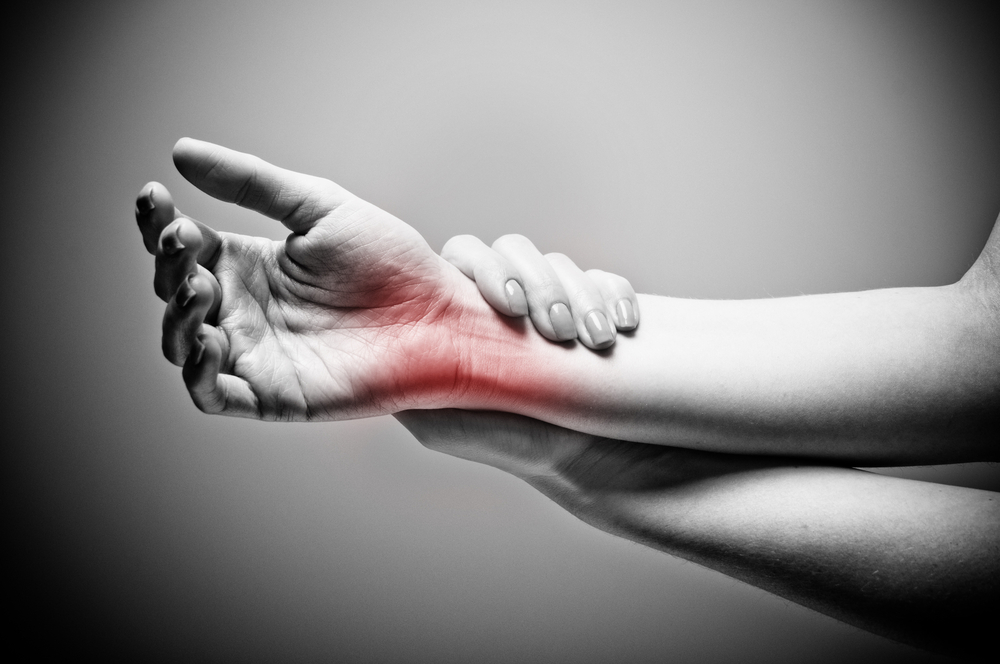
There can be many causes of wrist pain, including tendon strain, ligament strain, and even bones being slightly out of place.